Other common names:
Chinese Sumac, Tree of Heaven Other scientific names: Ailanthus glandulosus, Ailanthus peregrina, Toxicodendron altissimum French names:
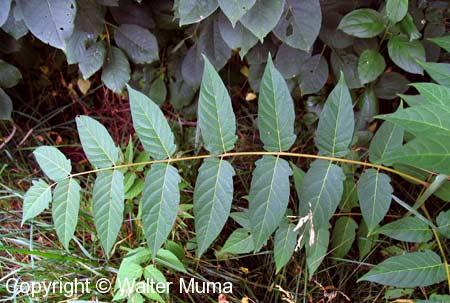
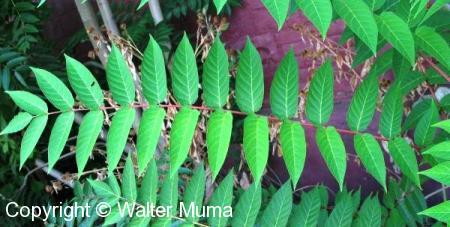
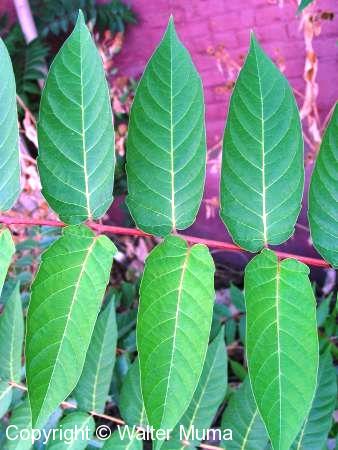
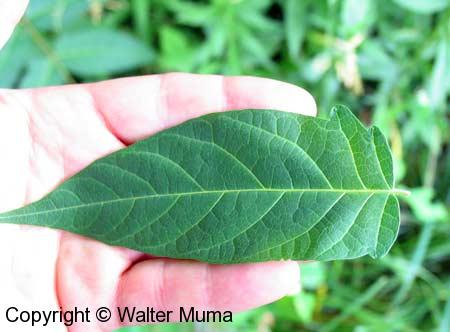
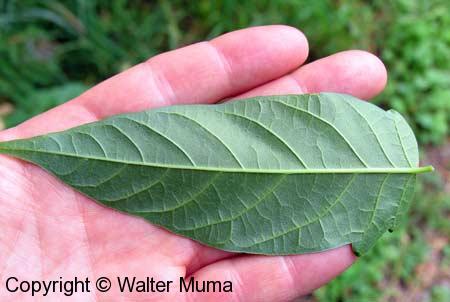
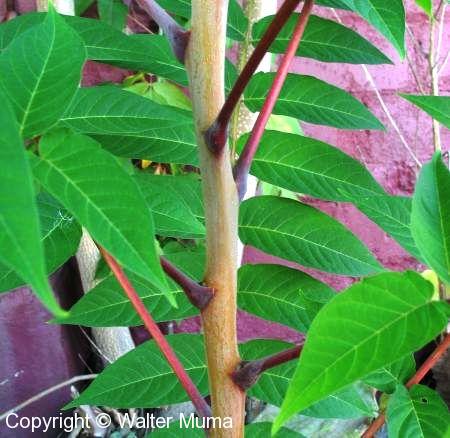
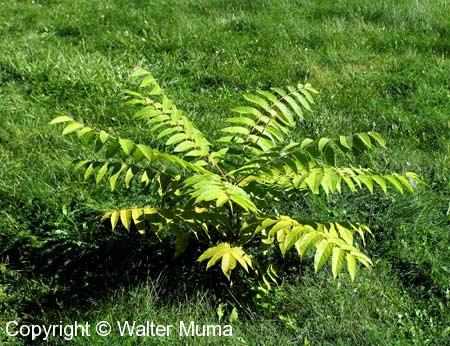
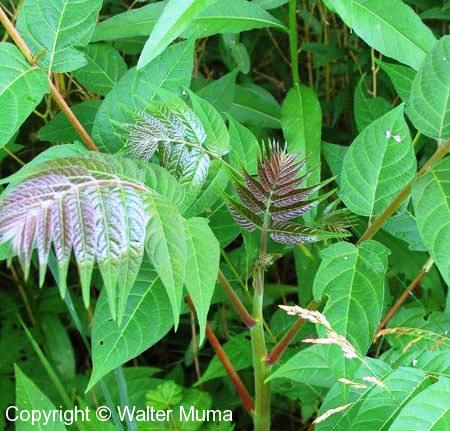
Ailante glanduleux Family: Quassia Family (Simaroubaceae) Group: Sumacs Distinctive features: Tree; Large compound leaves with strong unpleaseant smell when crushed. Similar species: •
Staghorn Sumac (Rhus typhina) - leaves don't smell. Stems fuzzy. •
Smooth Sumac (Rhus glabra) - leaves smaller; resembles Staghorn Sumac (Rhus typhina). • Poison Sumac (Toxicodendron vernix) - grows in wet areas. Flowers: Summer Leaves: Alternate, Compound, Entire; Large. Strong unpleasant smell when crushed. Habitat: Fields and Open Areas; Along edges of city lots; by the sides of buildings. Books: Trees in Canada: 232 Native/Non-native:
Non-native Status:
Common in cities.
Notes:
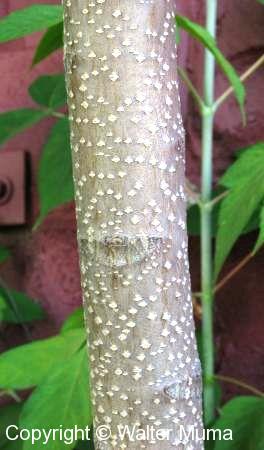
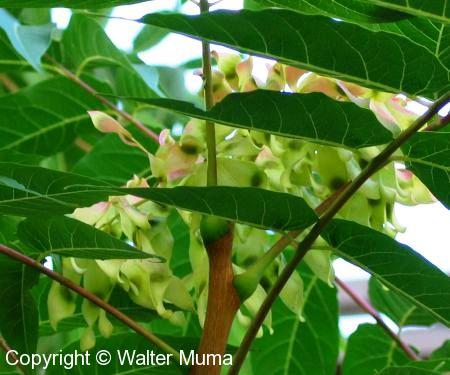
Ailanthus can easily be mistaken for Sumac if one is not familiar with these trees. Also known as Tree Of Heaven, it is a native of Asia.
Origin and Meaning of Names:
Scientific Name: altissima: tall Photographs:
34 photographs available, of which 11 are featured on this page. SCROLL DOWN FOR PHOTOGRAPHS.