Other common names:
American Prickly Ash, Common Prickly Ash, Northern Prickly Ash, Toothache Tree, Yellowwood Family: Rue Family (Rutaceae) Group: Ashes Distinctive features: Shrub; Alternate compound leaves, thorns. Forms impenetrable thickets. Flowers: Summer; Green/Brown; 4 parts (petals) Leaves: Alternate, Compound, Entire; Alternate compound. Fruit/Seeds:
Hard fragrant (when scratched) berries. Habitat: Fields and Open Areas; Open areas. Books: Trees in Canada: 220 Newcomb's Wildflower Guide: 170 Native/Non-native:
Native Status:
Common.
Notes:
Prickly Ash is not an ash. It was probably thus named because of the resemblance of its leaves to those of Ash trees. Prickly Ash has thorns.
Origin and Meaning of Names:
Scientific Name: americanum: American Photographs:
106 photographs available, of which 12 are featured on this page. SCROLL DOWN FOR PHOTOGRAPHS.
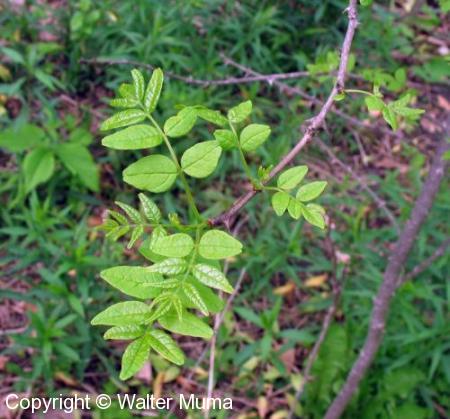
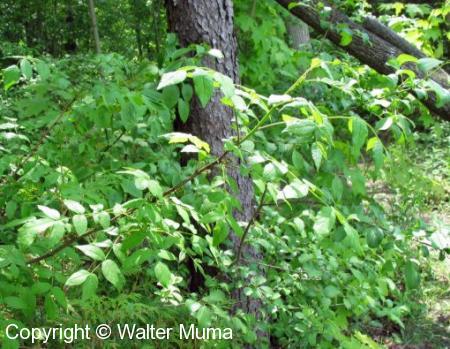
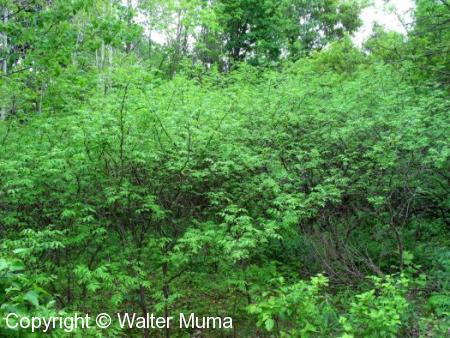
Young leaves coming out in the spring. Prickly Ash leaves come out later than most other shrubs in Ontario.
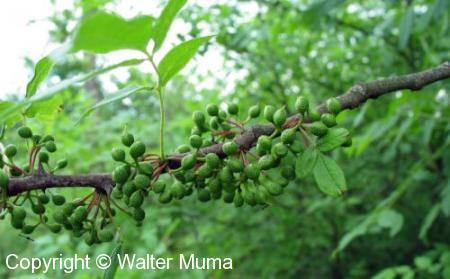
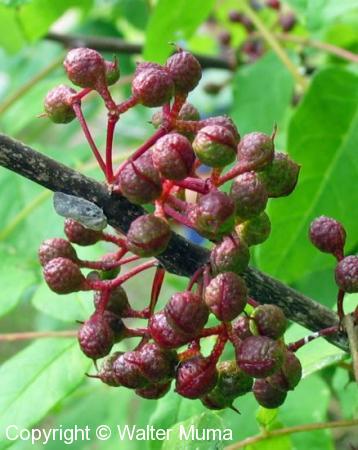
Nuts developing. When rubbed or crushed, they have a pleasant lemon-like scent.
Close-up of the nuts.
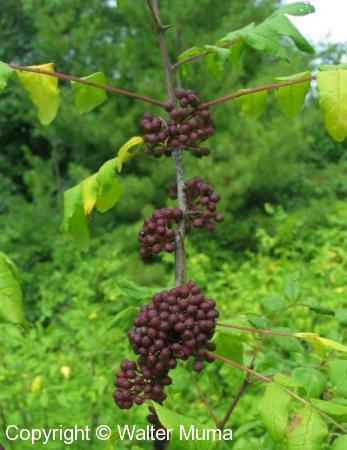
Clusters of ripe nuts on a Prickly Ash shrub, in late summer.
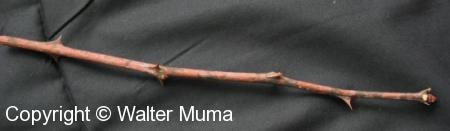
Winter twig, showing thorns. The thorns are opposite.
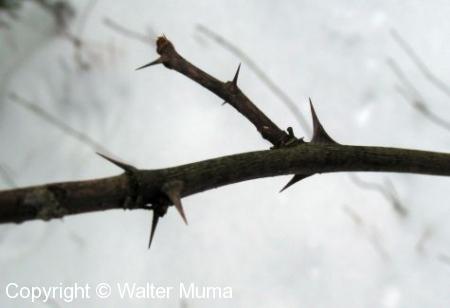
A closer picture of the thorns. They're wicked!
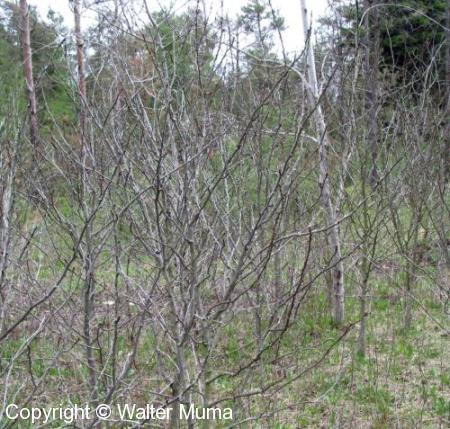
This early spring photo shows how Prickly Ash frequently grow in dense thickets which, due to the thorns, are almost impossible to penetrate. With care, and if you move slowly, you can get through. But moving quickly through such a grove can be painful!