Other common names:
Bunchberry Dogwood, Dwarf Cornel French names:
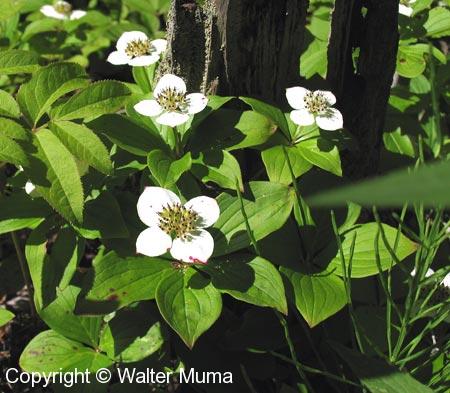
Cornouiller du Canada Family: Dogwood Family (Cornaceae) Distinctive features: Sub-Shrub; Very low plants, typical dogwood leaves, bright white flowers, red berries. Flowers: Summer; White; 4 parts (petals); White, tiny cluster, surrounded by white petal-like bracts. Leaves: Opposite/Whorled, Simple, Entire; Whorled on one tier. Occasionally on two tiers. Typical Dogwood style leaves. Height:
5-15 cm (2-6 in) Trunk:
Stem very short - this is a "subshrub". Habitat: Forests; Common in woods everywhere. Also in bogs. Edible:
The berries are edible, but hardly worth it due to the single hard seed at the center to which the edible part clings tenaciously.
Books: Peterson's Field Guide to Wildflowers: 4 ROM Field Guide to Wildflowers of Ontario: 242 Newcomb's Wildflower Guide: 152 Native/Non-native:
Native Status:
Very common.
Origin and Meaning of Names:
Scientific Name: canadensis: of Canada For more information visit: Ontario Wildflowers Photographs:
118 photographs available, of which 9 are featured on this page. SCROLL DOWN FOR PHOTOGRAPHS.
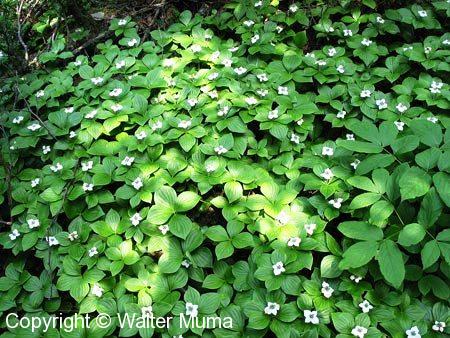
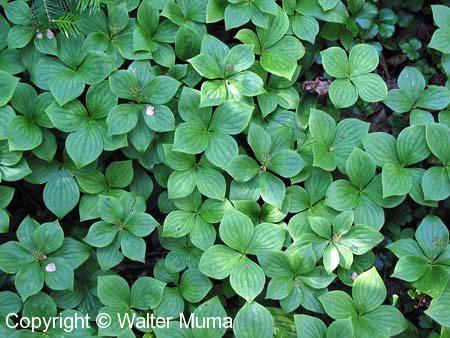
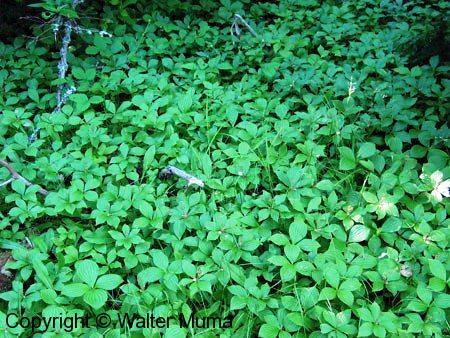
A "grove" of Bunchberry in the forest, in bloom.
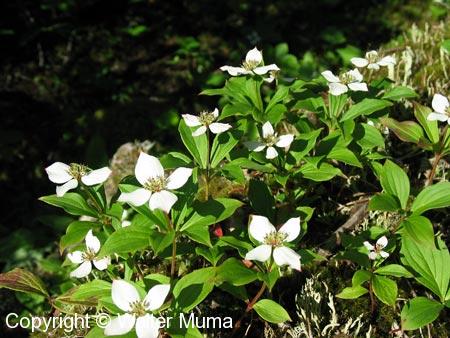
Closer view of some flowers.
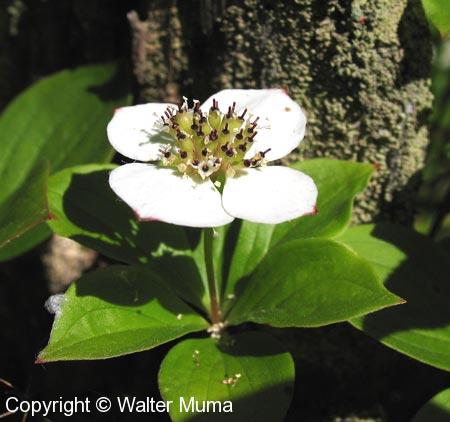
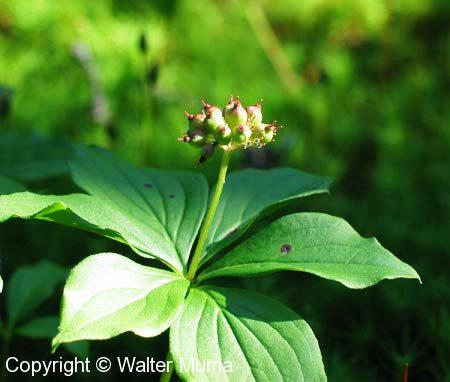
Flowers done, fruits forming. The white "petals" are actually bracts surrounding a cluster of tiny individual flowers.
Fruit forming in July.
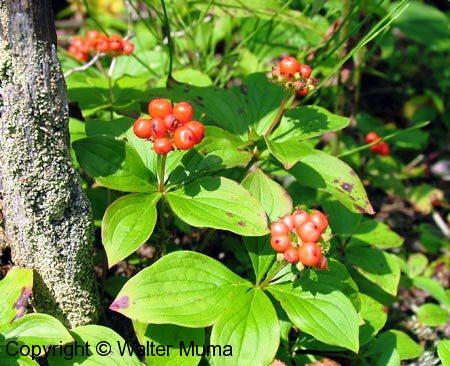
Alsmot-ripe berries.
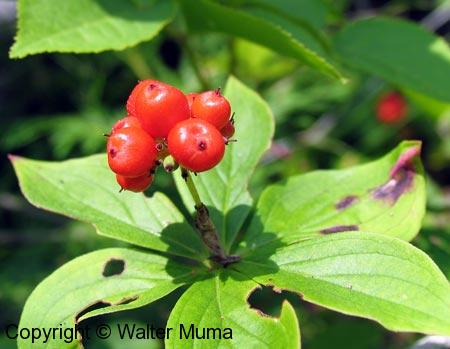
Ripe fruits in July. These berries are edible. However, they are hardly worth the effort, as they contain a very large and very hard single seed. The fruit pulp sticks tenaciously to this seed, and it's very difficult to separate.
Bunchberry make a great ground cover, if you are into native plant gardening and naturalizing your property.