Other common names:
Creeping Mayflower, Mayflower French names:
Épigée rampante Family: Heath Family (Ericaceae) Distinctive features: Sub-Shrub; Leathery leaves on a ground-hugging plant in the forest. Flowers: Spring; White; 5 parts (petals); White or pink. Early summer. Leaves: Alternate, Simple, Entire; Alternate, oval. Rounded or pointed at the ends. Hairy. Height:
A trailing, ground-loving plant. Habitat: Forests; Forest. Books: Newcomb's Wildflower Guide: 198 Peterson's Field Guide to Wildflowers: 38, 236 ROM Field Guide to Wildflowers of Ontario: 252 Shrubs of Ontario: 373 Native/Non-native:
Native Status:
Common in Ontario. Rare in some other places.
Notes:
Provincial flower of Nova Scotia.
Origin and Meaning of Names:
Scientific Name: repens: trailing Photographs:
172 photographs available, of which 6 are featured on this page. SCROLL DOWN FOR PHOTOGRAPHS.
Range Map is at the bottom of the page
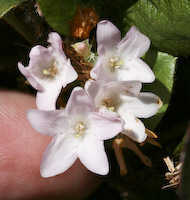
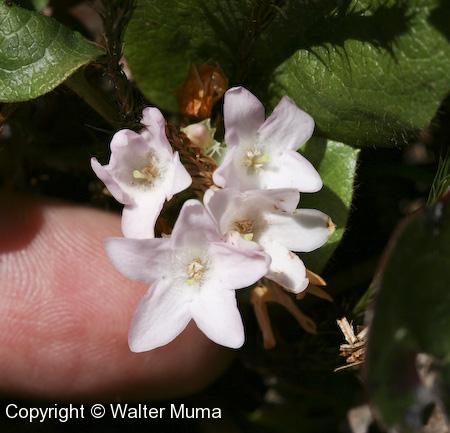
Trailing Arbutus flowers in early May.
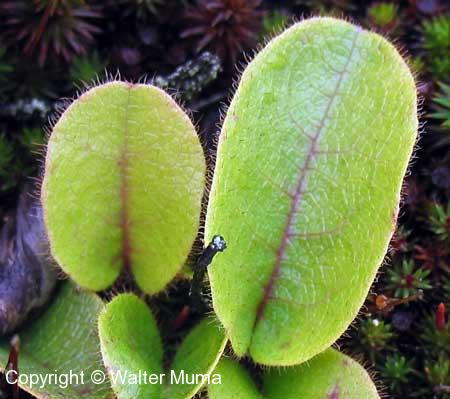
Closeup of a leaf.
Although Trailing Arbutus is technically a shrub, it does not immediately look one. It is one of the "subshrubs". It likes to trail along the forest floor.
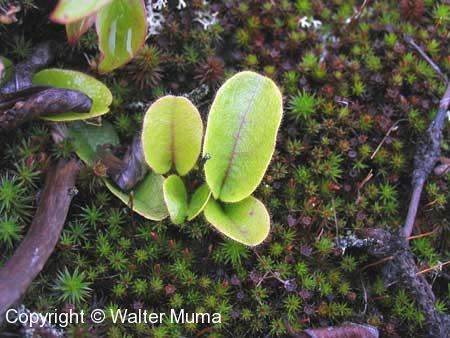
It can also be found growing in moss.
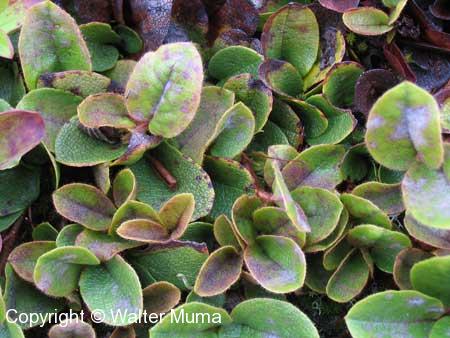
Sometimes, later in the summer, or early in the fall, its leaves may look a bit worse for wear.
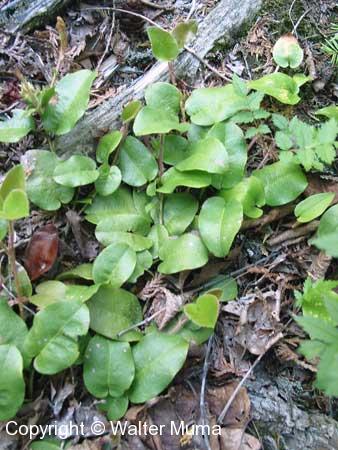
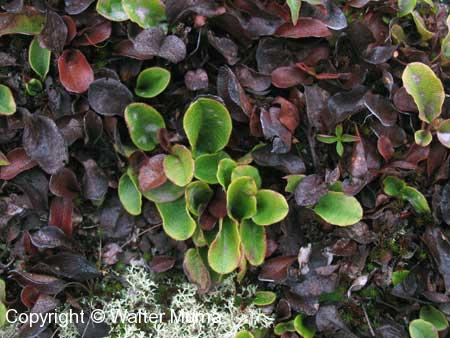
Here's some fresh leaves growing up from a bunch of dead ones.
PLEASE NOTE: A coloured Province or State means this species occurs somewhere in that Province/State.
The entire Province/State is coloured, regardless of where in that Province/State it occurs.
(Range map provided courtesy of the USDA website
and is displayed here in accordance with their
Policies)